Posts Tagged ‘learn spanish’

Aprender español cantando

Jueves, Noviembre 5th, 2009

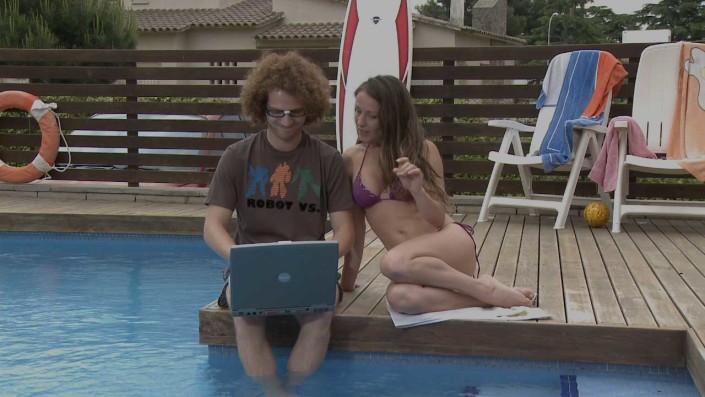
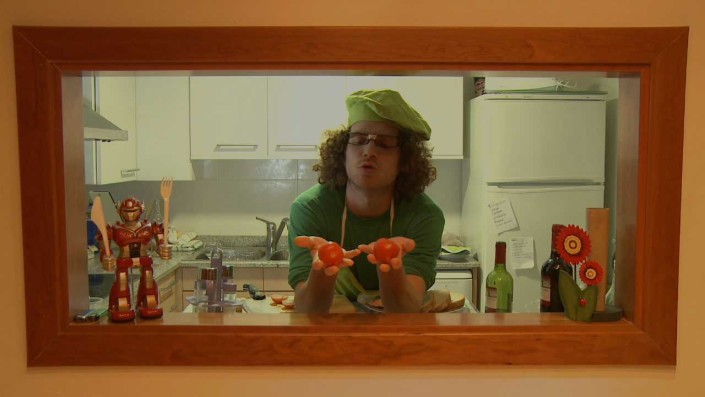
Lingus.tv presenta el nuevo éxito musical en youtube:

(más…)

The Spanish learning ladder: Level 3, Advanced

Miércoles, Noviembre 19th, 2008


This is the last in a series.

When you initially start learning a language, the idea of one day reaching the Advanced level might seem like a remote, faraway dream. But if you’re consistent and patient, getting to an Advanced level of Spanish is definitely within the realm of possibility.

Let’s take a look at the three sub-categories of Advanced and figure out what it takes to get there.

ADVANCED LOW: A person in this category has a good handle on Spanish grammar. He can describe things and narrate in the past, present and future tenses and when an unexpected bump in the conversational road emerges, he can roll with the punches if it is related to a routine situation. However, the Advanced Low student still has a tendency to use literal translations or structures from his native language in Spanish. He also does a lot of self-correction in mid-sentence, which highlight that he’s not fully a native speaker. Also, the Advanced Low tends to have a vocabulary that can seem very generic. Instead of knowing several different ways to express a single idea, he only knows one way and that’s the way he always uses.

ADVANCED MID: At this stage, the student is rocking. He is an active participant in both formal and informal conversations and has no problem whatsoever narrating and describing things in different Spanish tenses. He definitely knows enough Spanish to work in the language at this point. Where Advanced-Mid speakers get tripped up is when they have to back up their opinions or talk about abstract concepts, like politics or morality or religion, for example, in an extended conversation. That’s when they typically might hit a brick wall because they lack the right vocabulary or conversational structures to ease in and out of these linguistic alleys.

ADVANCED HIGH: The student at this level can pretty much do it all. He can provide a structured argument to support his opinions and he can construct hypotheses. He still makes errors, here and there, but they’re minor and may even go unnoticed because of the fluency of his speech. The Advanced High is also good at compensating for his deficiencies. He knows how to talk around a situation by paraphrasing or describing, if he lacks the precise words to express himself.

So what’s the bottom line? Getting to the Advanced level and continuing to progress really comes down to building your confidence in using the language and expanding your vocabulary. A great way to do both is to find conversational language partners who you can meet with on a regular basis to chat with in Spanish. Another great way is to read and write in Spanish. Reading in Spanish, exposes you to new words and new ways of expressing ideas. Writing in Spanish helps you uncover your weak spots in the language and gives you a non-stressful way of working out those kinks.

And if you do all that and you’re successful, one day you will finally reach the summit of Mt. Spanish and look down at all that you’ve conquered. By that point you will be at the SUPERIOR level, which is essentially native-level (or near native-level Spanish).

Hey, you didn’t think that “Advanced-High” was the end of the journey, did you? :D

Saludos,

Eleena

Eleena also blogs about the Spanish language at Voices en Español, a bilingual blog and conversational Spanish podcast.

Why making mistakes is the best thing that can happen to your Spanish

Miércoles, Septiembre 17th, 2008

Making mistakes. It’s something that many of us learning a second language hate to do. We don’t want to sound stupid, or worse, seem stupid. For many of us, we grow up receiving a mixed message from our parents, our teachers and basically our society, and that message is: Making mistakes are a fact of life but we should avoid making them at all costs.

Most of us can’t help it. We want to be perfect. When speaking Spanish, we want to speak it as fluently as we speak English (or French, German, Dutch, Japanese) or whatever our first language is. But the truth is is that we’ll never get to that level of fluency until we risk something and that means looking and sounding like an idiot from time to time.

Once at a party in Madrid, I was talking to a new mom about her baby and I kept saying pañuelos when I should’ve been saying pañales. Finally the mom, unable to take it anymore, said to me in Spanish, “Quieres decir pañales.¡Qué vergueñza! (How embarrassing!) But that one experience cemented in my brain the two words and I know I will never use them incorrectly again.

Don’t beat yourself up if you don’t have the precise vocabulary to express what you’re thinking. Talk around it or talk through it and use the vocabulary you already have. Let’s say you’re telling a Spanish-speaking friend about your job. In the middle of recounting the story, you suddenly realize you forget how to say the word “boss” in Spanish. Instead of freezing, keep going and talk your way through it. Although you may not know or remember the exact word for boss (jefe), you probably know how to say “la persona para quien trabajo.” Hey, it’s not concise but it gets the job done!

So the next time you feel the urge to zip it when you’re not 100% sure how to say something in Spanish, déjate llevar (go with the flow), and go ahead and say what’s on the tip of your tongue. It may be that you’re not as far off base as you think. And in the worst case scenario you make a mistake, but you will definitely learn from the experience, even if it is something as simple as the difference between a scarf (pañuelo) and a diaper (pañal). )

Have you ever made a whopper of a mistake in Spanish? What was it? Do you get uptight about making mistakes when speaking Spanish? What helps you get past that anxiety? Tell us your story in the comments section below.

-by Eleena de Lisser

Eleena also writes about the Spanish language at her bilingual blog “Voices en Español.”

Which Spanish should you learn?

Miércoles, Septiembre 10th, 2008

Today’s blog posting is from Eleena de Lisser, an American who has a very serious case of Spanish envy.  She’s fairly obsessed with the language, but in a good way. She must’ve been Spanish in another life.  In any case, Eleena will be posting here weekly, ojalá, on Wednesdays, with various thoughts and tips related to learning and using Spanish from the perspective of an English speaker who has studied the language for years. Without further to do, take it away, Eleena….

Which Spanish should I learn?

It’s a perennial question that beginning students of Spanish frequently ask. Which Spanish should I learn? Spanish spoken the way it is in Spain? Or Spanish the way it is spoken in Latin America?

First of all, let’s set the record straight. The beautiful language called castellano that is spoken on the Iberian Peninsula of Europe is the same Spanish language spoken in Latin America. Speakers’ accents and some vocabulary are different, of course, but the nuts and bolts of the Spanish language are the same regardless of whether you’re chilling in Chile, Mexico, Puerto Rico or Spain.

Consider the example of two native English speakers — one from the United Kingdom and the other from the United States. Do they sound the same when they speak English? Definitely not. But can they generally understand what the other person is saying without any difficulty? Generally, (hopefully) yes. :)    It’s pretty much the same way with Spanish speakers.

That said, there are some important differences between castellano or Castillian Spanish (Spanish spoken in Spain) and the Spanish spoken in North, Central, South America and the Caribbean. They are:

•    Vosotros y Ustedes:  Both of these pronouns are the plural “you” in Spanish. However, vosotros, is used only in Spain, whereas in Latin America only the ustedes form is used.

•    Pronunciation: In Spain, the the letter z and the letter c before i or e, are pronounced like the “th” in  “that”. (To English speakers, it sounds kind of like a lisp, but it isn’t. Trust me, once you get the hang of saying your words that way, it really sounds rather cool. ) In Latin America, the pronunciation of those same letters would sound more like an English “s.”  Another major difference, primarily found in Argentina and Uruguay, is the pronounciation of the ll and y like the “s” in the English word “measure.” In some parts of the Spanish-speaking world, native speakers routinely drop the “s” from their words, so a simple greeting like ”¿Cómo estás?” sounds more like “¿Cómo etá?

So which Spanish should you learn? Well, it all depends on what your future holds. If you wish to work or study in Spain, you must learn the vosotros form, otherwise your Spanish will sound extremely formal if you constantly use ustedes.  But if  your plans are to work or live in Latin America, there’s little need for you to concentrate on vosotros. That said, it would be a good idea to at least be familiar with the vosotros form so that you can recognize it when you encounter it.

The bottom line is that as long as you’re learning a grammatically correct Spanish, you will always be understood and be able to communicate with Spanish speakers regardless of nationality.

What are some of the notions (preconceived or not) that you have (or used to have) about Spanish? What are some of the ideas or expectations you currently have (or used to have) about the language? Share your thoughts with us. Don’t be shy, post below in the comments section. Thanks!

-By Eleena de Lisser

Eleena is a self-described Spanish language fanatic who came to Madrid a few years ago to study the language and basically never left. She spends her spare time filling the content pipeline of her three blogs, two of which are at Voices en español and the other is Cody’s Cuentos.

Top 5 Excuses for Not Learning a Second Language

Viernes, Agosto 8th, 2008

http://farm2.static.flickr.com/1239/1279454905_0be34c64b2_m.jpg

1. I Can’t Learn a Second Language because I don’t Live in Spain

I will be the first to admit that your chances of learning, comprehending and utilizing a second language increase 10 fold if you live in the country for which your target language is spoken, but that should never stop you from at least trying. We are not victims of our surroundings. I retook first level Spanish three times in the USA, in hopes of understanding it, but I learned that for me, without context and practice, it was difficult for me to learn. So I picked up a book in another language, watched videos with the subtitles active, and when I was very motivated, I volunteered as a TEFL teacher in return for Spanish lessons. It was a lovely little intercambio!

2. I’m too Old to Learn a Second Language

There is nothing that astounds me more than hearing someone throw out this illogical excuse – although I’ve done it myself more than once. There is absolutely no proof that I am incapable  of learning a second language after a certain age.? Now, there is no argument that the process of becoming proficient will take longer at 32 or 82 yeas of age than if I’m at the young, impressionable age of 2 to 5, but it is not impossible. It only requires me to have a bit more faith and patience in myself, and the world around me.

3. I don’t have a Good Ear (más…)

Una nueva forma de aprender español

Jueves, Julio 31st, 2008

¡Cómo pasa el tiempo! Parece que fue ayer cuando nos enfrentábamos a nuestra primera clase y nuestro pequeño grupo de estudiantes de variadas procedencias esperaba con curiosidad que abriéramos la boca. Y ya han pasado más de 10 años.

Una época en que el Instituto Cervantes apenas daba sus primeros pasos, donde no abundaban los materiales específicos para la enseñanza del español ni tampoco los profesores eran especialistas en la enseñanza de Español como Lengua Extranjera. En muchas escuelas se basaba todo en la experiencia, la buena voluntad y el “marco” que rodeaba al aprendizaje: monumentos, fiestas y actividades diversas. Y eso es algo que evidentemente ayuda.

Pero, creo que afortunadamente, ahora la situación es diferente. Los estudiantes exigen cada vez más calidad en la enseñanza que reciben, profesionalidad en quien imparte las lecciones y garantías de todo tipo. Buscan un aprendizaje en el que se puedan implicar y se diviertan; rechazan ser espectadores en clases magistrales.

Todo esto nos empujó a iniciar el proyecto de E.L.E. Instituto en Valladolid. Es nuestro objetivo ofrecer a nuestros estudiantes una enseñanza de calidad y metodológicamente moderna, con unos servicios e instalaciones adecuados y en un marco, la ciudad de Valladolid, que consideramos idóneo para nuestro fin: una ciudad de tamaño medio, bien comunicada, joven y con fama reconocida de corrección en el uso del español.

Y todo esto nos lleva también a apoyar con toda la fuerza e ilusión de la que somos capaces el proyecto de LingusTV, del que somos responsables de los contenidos pedagógicos. Entendemos que se trata del escalón que faltaba en la escalera: un formato novedoso, apoyado en las más modernas herramientas tecnológicas, con una finalidad eminentemente pedagógica, con un equipo joven y dinámico, y con el objetivo fundamental de enseñar divirtiendo.

¡Que nuestros “alumbramientos” disfruten de larga vida!

José Miguel Blanco

www.eleinstituto.com

The challenge of teaching spanish through a sitcom

Martes, Julio 8th, 2008

When I started to make LingusTV, I wasn’t very sure about which format I should choose to teach Spanish. A talk show? A news program? A comedy?

Toni and Joan convinced me to use the sitcom as the main content and we created ‘5 y acción’. I think it was a great idea. But for us it was a challenge to combine a convincingly acting while controlling the pronunciation speed and vocalization of the characters.

This is the reason why the first episodes are all advanced level. In the following episodes we shooted we worked hard in these aspects. You’ll see the diference in the next weeks…. ;-)