Archive for the ‘learn spanish’ Category

How “lo” can you go?

Miércoles, Diciembre 10th, 2008

English speakers use the word “thing” a lot. It is an all-purpose word we use to express our thoughts when we either can’t or don’t want to specify the “thing” we’re talking about. So when English speakers speak Spanish, we tend to translate “thing” directly as “cosa” in all situations (la buena cosa, la mala cosa, etc.), even though there is a better way.

Here’s a quick tip: Use the Spanish pronoun “lo” + an adjective and, voíla, you are expressing the same “thing” but in a more efficient manner.

For example:

Juan ha encontrado trabajo. Lo bueno es que ahora puede comprarse un coche nuevo. Lo malo es que tiene que madrugar todos los días para llegar a tiempo. (John has found a job. The good thing is that now he can buy himself a new car. The bad thing is that he has to get up early every day to arrive on time.)

Lo maravilloso de Sevilla es sus barrios. Lo pesado es que a veces cuesta encontrar un taxi. (The wonderful thing about Seville is its neighborhoods. The annoying thing is that at times it is hard to find a taxi.)

So the next time you wish to talk about some “thing” in Spanish that is attached to an adjective, use  “lo + adjective” instead of “cosa + adjective.” Not only is the “lo” structure easy to create, it will also make you sound more native when you speak Spanish.

Hasta la próxima,

Eleena

I also blog about the Spanish language on Facebook and Twitter. Drop by and say hello some time! )

Meet & Greet: Going beyond “Hola” in Spanish

Miércoles, Diciembre 3rd, 2008

Want to add some variety to the standard greeting of “Hola, ¿Cómo estás?” in Spanish? Here are a few phrases you can use when you see or meet someone.

¿Qué tal?, you probably already know. That’s an all-purpose question that can mean “What’s new?” “How are things?” or “What’s up?” Some other phrases in Spanish that have the same meaning are:

¿Qué tal va?

¿Cómo van las cosas?

¿Cómo andamos?

And when you bump into an old friend, you can say:

¿Tú por aquí? (What are you doing here?)

¡Cuánto tiempo sin verte! (It’s been ages since I last saw you!)

¡Anda, qué sorpresa! No esperaba encontrarte aquí. (Gosh, what a surprise! I didn’t expect to find you here!)

¿Tambíen vienes por aquí? (So you come here too?)

Te veo muy bien. (You’re looking good. You look good.)

———-

I’ve recently started micro-blogging over at Facebook and Twitter. Drop by and say hello some time! :)

Salmorejo Recipe from Andalusia

Viernes, Noviembre 28th, 2008

Salmorejo

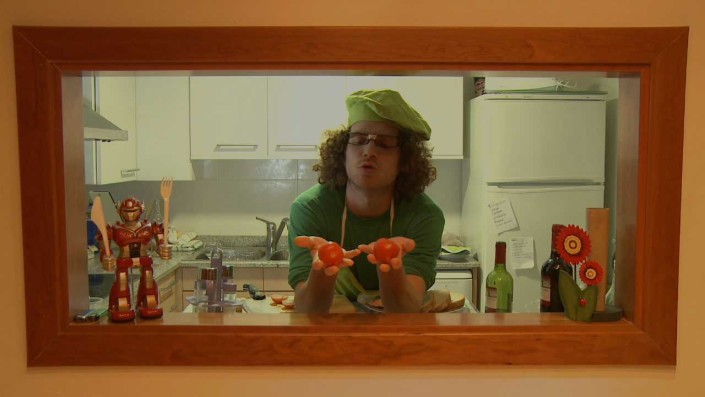
I love Salmorejo! Winter or summer, this is one of the most lovely dishes to enjoy with a glass of Sherry. Filling yet refreshing, I couldn’t suggest a more ideal soup when you simply want a five minute recipe in a pinch.

Ingredients

40 oz of tomatoes (skinned and cored)
1 garlic clove (personally, I like two) pealed and chopped
A small piece of day old bread (approx. 4 in.)
2 tbs Vinegar (Pedro Ximenez is ideal if you can find it)
1/8 litre of Extra virgin olive oil
Salt to taste

Garnish (optional)

1 Boiled egg
Cubed serrano ham
Cubed tomatoes
Fresh cilantro

Preparation

Immerse the bread in a bowl of water. I can’t emphasis enough how important this step is as I have failed to do this on many occasion, which has led to a slightly lumpy soup thick soup. Trust me, not the ideal. While this is soaking, blanch the tomatoes. Put under cold water briefly, then peel, core and cube them.

When the bread is finished, but it into a bowl and squeeze out the extra water. You can also wrap the bread in a cheese cloth and twist, which will accomplish the same task.

In the bread bowl, add tomatoes, salt, garlic, and then mix. You can use a serious high powered mixer, or simply a hand mixer, but either way, your end goal is to create a creamy thick mixter sans lumps. If the texture is too dense, add a touch of water, mix, check and repeat if necessary.

Once your ideal texture is reached, check for salt using the same steps, followed by vinegar. This is a slow process that requires a bit of patience, but if you don’t stop to check the progress of your Salmorejo, you may be adding too much acidity, salt, garlic etc. Therefore, best to stop, taste, repeat before adding more of any ingredient. Finally add the oil.

Presentation

Although you could technically have salmorejo alone, I find it lacks the pizazz that a little garnish can bring. I like to serve the salmorejo in small bowls surrounded with even smaller serving dishes filled with chopped bowled egg, tomatoes, jamon and cilantro (this is not typical garnish, but it is delicious). This way, your guests can pick and choose at their leisure what flavors best work for them. If the soup is thick enough, you can try various combinations of the garnish as you slowly make your way down to the bottom of the bowl.

Drink

As Salmorejo is from Andalusia, I would suggest Sherry! As there is a wide variety of sherry ranging from dry to sweet, light to heavy in body and from dark and spicy to light and refreshing, I think it’s impossible not to find one that suits you. For more information on Sherry wines, go here.

Cheers,

Gabriella

Gabriella Opaz is co-founder of Catavino.net – a website dedicated to Spanish and Portuguese wine

Reblog this post [with Zemanta]

Qué vs Cuál: Which one to use?

Miércoles, Noviembre 26th, 2008

Both qué and cuál can mean “what” and “which”, but they are not interchangeable. It can be confusing trying to sort out when to use each one but once you know the grammatical rule, it’s a snap.

  • Qué asks for an identification or a definition.

¿Qué es esto? What is this?
¿Qué es un cóctel Molotov? What’s a Molotov cocktail?

  • Qué followed by a noun asks “which one?”

¿Qué vestido te gusta más? Which dress do you like best?
¿Qué manzana vas a comer? Which apple are you going to eat?

  • Cuál followed by a form of the Spanish verb “ser” asks “what” (which one of all the possibilities).

¿Cuál es tu nombre? What is your name?

If someone were to ask “¿Qué es un nombre?” They are asking for a literal definition of what a name is. The answer: A name is a way of identifying a person.

¿Cuál es la fecha? What is today’s date?

If someone were to ask ¿Qué es la fecha? they would be asking literally for a definition of the word “date.”

“¿Cuál es tu número de teléfono?“ I will respond, maybe ) , by giving you a phone number. What’s your phone number? (Answer: 555-1234)

“¿Qué es un número de teléfono? Answer: A phone number is a series of digits that connects to a communication device and enables one person in one location to speak to another person in another location.

  • Cuál + de + a plural noun asks “which” of two or more alternatives.

¿Cuál de los libros prefieres? Which book do you prefer?

Have Spanish grammar or vocabulary questions? Visit the Word Reference Spanish-English forum for quick answers.

–By Eleena from Voices en Español

The Spanish learning ladder: Level 3, Advanced

Miércoles, Noviembre 19th, 2008


This is the last in a series.

When you initially start learning a language, the idea of one day reaching the Advanced level might seem like a remote, faraway dream. But if you’re consistent and patient, getting to an Advanced level of Spanish is definitely within the realm of possibility.

Let’s take a look at the three sub-categories of Advanced and figure out what it takes to get there.

ADVANCED LOW: A person in this category has a good handle on Spanish grammar. He can describe things and narrate in the past, present and future tenses and when an unexpected bump in the conversational road emerges, he can roll with the punches if it is related to a routine situation. However, the Advanced Low student still has a tendency to use literal translations or structures from his native language in Spanish. He also does a lot of self-correction in mid-sentence, which highlight that he’s not fully a native speaker. Also, the Advanced Low tends to have a vocabulary that can seem very generic. Instead of knowing several different ways to express a single idea, he only knows one way and that’s the way he always uses.

ADVANCED MID: At this stage, the student is rocking. He is an active participant in both formal and informal conversations and has no problem whatsoever narrating and describing things in different Spanish tenses. He definitely knows enough Spanish to work in the language at this point. Where Advanced-Mid speakers get tripped up is when they have to back up their opinions or talk about abstract concepts, like politics or morality or religion, for example, in an extended conversation. That’s when they typically might hit a brick wall because they lack the right vocabulary or conversational structures to ease in and out of these linguistic alleys.

ADVANCED HIGH: The student at this level can pretty much do it all. He can provide a structured argument to support his opinions and he can construct hypotheses. He still makes errors, here and there, but they’re minor and may even go unnoticed because of the fluency of his speech. The Advanced High is also good at compensating for his deficiencies. He knows how to talk around a situation by paraphrasing or describing, if he lacks the precise words to express himself.

So what’s the bottom line? Getting to the Advanced level and continuing to progress really comes down to building your confidence in using the language and expanding your vocabulary. A great way to do both is to find conversational language partners who you can meet with on a regular basis to chat with in Spanish. Another great way is to read and write in Spanish. Reading in Spanish, exposes you to new words and new ways of expressing ideas. Writing in Spanish helps you uncover your weak spots in the language and gives you a non-stressful way of working out those kinks.

And if you do all that and you’re successful, one day you will finally reach the summit of Mt. Spanish and look down at all that you’ve conquered. By that point you will be at the SUPERIOR level, which is essentially native-level (or near native-level Spanish).

Hey, you didn’t think that “Advanced-High” was the end of the journey, did you? :D

Saludos,

Eleena

Eleena also blogs about the Spanish language at Voices en Español, a bilingual blog and conversational Spanish podcast.

Chambao – A Musical Cross between Flamenco and Chillout

Viernes, Noviembre 14th, 2008

When I first moved to Spain four years ago, I was as unfamiliar with Spanish music as I was of their culture of food, wine, architecture and art. My ignorance extended so far that I imagined Spain as a slightly more conservative and reserved version of South America. And although I could argue that this is partially correct, I failed to understand the complexities behind this incredibly layered and beautiful culture.

Part of what makes Spain so unique and special, is it’s approach to community and socialization. The street is your home. Filled with outdoor cafes, promenades, street performers and impromptu musical performances, life begins and ends under the bare star studded sky.

For me, it was truly a culture shock to join my four roommates and their dozen friends for a night of tapas, outdoor concerts or simply loitering in a plaza. While I was used to intimate conversations with close friends in wine bar, or enjoying a long lingering dinner in their backyard, Spain shook up my sense of word “gathering” to include a half dozen people hanging out in the street who most likely have known each other for the majority of their natural born lives. I was merely an outsider looking in, but warmly accepted for both my cultural similarities and differences.

However, although I was stunned and overwhelmed with the outdoor herd mentality, as days ebbed into months, my need for personal space and long, quiet conversations relaxed, and suddenly, I craved the impromptu songs, the free form dance styles and the “whatever” approach to time and obligations.

And in this cultural transformation, I was embraced by a sound I have forever weaved into my initial understanding of Spain, flamenco chill. Chambao, a flamenco-electronic band often covered by small groups of people in any given plaza in Madrid. Originally from Malaga, Andalucia, Spain, Chambao is renown for a ‘flamenco chill’ sound that interweaves flamenco sounds and palos (forms) with electronic music. La Mari del Mar is the lead vocalist, songwriter and producer of this ever evolving band; who if seen in concert, is said to be a whirlwind of vibrant energy and joy. Put another way, imagine a style of music that not only forces a smile on your face with its upbeat and rhythmic tones, but also creates a sense of freedom and personal expression, enticing your hips to move, your hands to clap and your body to sway and turn. The etymology of the name, Chambao, is taken from an improvised form of beach tent that is constructed so as to shelter you from nature’s harsh elements.

If you’ve never heard the music of Chambao, I highly suggest you take a moment and go to iTunes, Jango or Pandora to have a listen. It’s worth your time!

Vocabulary

el vestido de flamenco – flamenco dress
el bailarín – dancer
el cantante/la contante – singer
oír – to hear
escuchar – to listen
bailar – to dance
tocar – to play
aplaudir – to applause/clap
la canción – song
el tambor – drum
la guitarra – guitar
el golpeador – flamenco guitar

NOTE: A great way to learn Spanish is by listening to music. If you find a song of Chambao you like in Spanish, find the Spanish lyrics here and the English lyrics here. When you have a good understanding of the text, put the English lyrics away and sing along with the song over and over again with the Spanish lyrics in hand. What this does is not only stimulate both auditory and visual senses, but it helps you to gain a better understanding of the vocabulary, pronunciation and word order.

What is your favorite Spanish music to practice your language skills?

Saludos,

Gabriella

Gabriella Opaz is co-founder of Catavino.net – a website dedicated to Spanish and Portuguese wine

Reblog this post [with Zemanta]

The Spanish learning ladder: Level 2, Intermediate

Miércoles, Noviembre 12th, 2008

For the past few weeks I’ve been blogging about the Beginner level of Spanish in terms of how to define it and steps to take to advance beyond it. Today I’m going to take a look at the Intermediate level. Defining this level is tricky because it is what it is….right in the middle. But to keep things consistent with the format of my previous post about beginners, I will divide the Intermediate category into three sub-categories: UPPER INTERMEDIATE, TRUE INTERMEDIATE and FALSE BEGINNER.

Let’s start from the bottom and then work our way up.

FALSE BEGINNER: This is essentially Low Intermediate. The reason why I’m calling it “False Beginner” is because frequently people at this stage don’t consider themselves at an intermediate level. Orally, they understand more Spanish than they can speak. They know enough Spanish to communicate in every day situations. However, they struggle to answer direct questions or requests and typically speak in a halting manner with a lot of pauses. They generally feel very self-conscious and awkward speaking Spanish and can’t maintain a conversation beyond a few sentences. If you were to ask them if they speak Spanish, they’d laugh and say “Aww, not really. I’m just a beginner.” But based on how much basic grammar and basic vocabulary the False Beginner already knows, he is better labeled as a Low Intermediate because somebody at the beginner level is unable to do many of the language tasks that the Low Intermediate student is capable of doing. That said, the distinction between a “False Beginner” and an “Advanced Beginner” can, at times, be negligible. I’d say that what distinguishes those two is the higher comprehension level of the False Beginner and an ability to “last longer” in a language situation by speaking in sentences.

TRUE INTERMEDIATE: A language learner at this level is beginning to hit his stride. While his conversational level is still limited to predictable and straightforward scenarios, he’s got more linguistic confidence and a bigger vocabulary than the False Beginner. He’s capable of handling what linguists consider “uncomplicated communicative tasks” that deal with his everyday life and he’s fine with asking questions when necessary to get information. While he still makes a lot of mistakes, he’s often aware that he’s making them and corrects himself. There may be a lot of pauses when he speaks but he pretty much knows how to structure sentences in Spanish. His biggest problem is linking his ideas when speaking and mixing different Spanish verb tenses and moods. He still needs to work on that. But in terms of maintaining a 5 to 10 minute conversation about himself, he can do it.

UPPER INTERMEDIATE: At this level, a person can speak Spanish with a lot of confidence. When it comes to routine social situations, the Upper Intermediate is a star. He can generally talk about almost anything and have fun while he’s at it. He clearly knows a lot of Spanish and has little difficulty initiating and maintaining simple conversations. What separates the Upper Intermediate student from the Advanced is accuracy and expressiveness, what is called “expresividad” in Spanish.

The Achilles’ heel for the Upper Intermediate is using all the different Spanish tenses and moods correctly and entering into a conversation that verges into abstract ideas or topics. In particular, while the Upper Intermediate is familiar with the Spanish subjunctive, he’s not comfortable using it. Although he still makes a lot of mistakes, thanks to his confidence and larger knowledge base of Spanish, he has an easier time masking his shortcomings.

Now for the good news/bad news about the Intermediate level. The good news is that the Intermediate level can be quickly achieved with motivation and focus, and once you reach it maintaining the level is not difficult. The bad news is that many people hit a plateau at the True Intermediate or Upper Intermediate levels and stay there. Forever. After all, the Intermediate stage is a comfortable place to be in. You know enough Spanish to enjoy social situations, strike up general conversations with people, give directions, talk your way out of some scenarios, etc. Life is good. And hey, at this stage you’ll definitely know more Spanish than most of your friends and family. So for many people, getting to this stage is enough.

What to do next: Figuring out where exactly you fit on the intermediate scale is definitely not something one can do with any real precision, especially at the lower level of the intermediate category. Generally speaking, you’ll know that you’re in the Intermediate category when you have a good grasp of basic Spanish grammar and a vocabulary sufficiently large enough to talk about yourself, your daily life, work/school, free time pursuits, etc.

Set a personal goal for yourself that you will be able to maintain at least a 10-minute normal conversation with someone about yourself and your life. Spend some time focusing on the Spanish past tenses and some tricky aspects of Spanish grammar (ser vs. estar, por vs. para) so that you know that stuff cold and won’t be second-guessing yourself on those areas. As you begin to learn the Spanish subjunctive, focus primarily on the present Spanish subjunctive so that you can really get a feel for how to use it correctly before adding on the other forms.

If you aspire to reach the Advanced stage, I’ll be back next Wednesday with another installment.

¡Hasta pronto!

Eleena also blogs over at Voices en Español, a bilingual blog and Spanish language podcast.

The Delicate Art of Balance in Learning the Spanish Language

Viernes, Noviembre 7th, 2008

Teach children long enough and you quickly realize how age is no indication of maturity. As much as I would love to believe that I have 33 years of wisdom and intelligence to fall back upon, the reality is, is that I’m as awkward and uncoordinated with my thoughts and emotions as any toddler is taking their first steps.

Just need to get my right foot forward. Damn my leg is heavy! Who made my leg so chubby and heavy? Stupid chubby leg! How am I supposed to move this fat stub and balance on this tiny foot at the same time? Breath…Okay..okay..almost there..Yeah! Whoo hoo. One step! Sweet!…Wait..What?!! Now you want me to move the left! No way lady! I’m sitting here and taking a breather. I’m saying “nap time” with the dog and my pacifier is what I’m saying or you’re going see some serious tears.

We cry, scream, hit and occasionally bite when we don’t get our way. We get angry, and take our frustrations out on the one’s we love, and more often, the one’s we don’t love. Rather than smiling and saying thank you to the store attendant, we nod our heads in a sign of acknowledgment but not necessarily with kindness or respect. We rarely move out of our seat for someone who needs it more, claiming that our day was equally as difficult as theirs, nor do we help each other even when help is completely warranted. We do this to protect ourselves from interacting or getting to close.

I say this because I’ve noticed that I’m becoming a little numb to granny needing a seat on the train, little Alvaro wanting to teach me about the cats who live under the bushes lining his apartment building, or the store attendant who asks me for millionth time, “De donde eres?

Stuck in our 2 bedroom apartment, rarely communicating in Spanish with the outside world, I fear at times that I’ll never master this language, and remain a toddler, communicating with short phrases while repeating the same verb tenses because they are the only ones I know. My fear builds up so profoundly that at times, even when I have the opportunity to write in Spanish, I remain paralyzed for fear that I’ll make an error. This is no way to learn a language, and I feel that maybe Eleena’s suggestions in taking 40 minutes a day to practice a group of vocabulary or a verb tense may not be such a bad idea.

Maybe maturity for me will come in recognizing where to divide my time between work, my relationships with others and my relationship with myself. To understand when to focus on my goals, such as improving my Spanish, and focusing on my future and relationship goals. Maybe my thirties will bring clarity as to how I can continually invite change without feeling barraged with instability. And maybe, just maybe, I’ll be able to take my first fluid steps towards appreciating the daily achievements, rather than remaining focused on lifelong goals.

Here’s to balance!

Gabriella

Gabriella Opaz is co-founder of Catavino.net – a website dedicated to Spanish and Portuguese wine

Reblog this post [with Zemanta]

Where can you find the time to study Spanish?

Miércoles, Noviembre 5th, 2008

This week I was going to blog about what it takes to be considered an Intermediate Spanish level student, but there are still some more things I’d like to say about the Beginner level.

I’ve seen people post questions in other Spanish learning forums and web sites asking for advice and suggestions on how to ramp up their learning speed. For many, the conventional methods of reading a textbook or attending a class a few days a week isn’t enough to keep them motivated nor to get the concepts to stick.

So how about treating your Spanish learning as a game that you can customize and play whenever you’ve got time? Here’s my proposal to you: Commit to spending a minimum of 10 minutes a day, every day, to learning Spanish. Over the course of one year, you will have magically (and hopefully effortlessly) have spent at least 61 hours solely on Spanish.

Can’t find 10 minutes? Trust me, you can. Monday through Friday a minimum of 40 minutes a day to focus on Spanish automatically falls in my lap. How? That’s the amount of time I spend just in walking to and from the Metro station. Since I’m walking, the only thing I can do is listen to my iPod.  Believe me when I say that you won’t have to make time for this activity because you already have the time.

Here are 10 ways you can find at least 10 minutes each day to study Spanish:

1.    When you wake up in the morning, tune in to Spanish radio or Spanish TV.
2.    In the shower.
3.    While brushing your teeth.
4.    During breakfast.
5.    When you buy your morning coffee or stop at a newstand for a paper or cigarettes.
6.    During your daily commute, when stuck in traffic or waiting for the bus or the train.
7.    In an elevator or walking to your car or the bus or train station.
8.    While on hold or waiting for someone.
9.    At the store.
10.    When you take your dog for a walk.

Depending on what your lifestyle and routine is like, you can certainly find other ways.

And what, exactly, should you study? Well, this is the beauty of the game, you can study whatever you like.

For example, you could draft a list of words or expressions you want to memorize and look for opportunities to “use them” throughout your day. I recommend buying a pocket-sized notebook that you can jot down phrases in and that way you can look at them frequently throughout your day, whenever you’re seated or waiting for something or someone.  If you’re not living in a Spanish-speaking country, you will probably have to say these words or phrases silently to yourself, in your head, just so that the people around you won’t think that you’re crazy. But don’t worry about them, you’re working on your Spanish.

In other situations, remind yourself of the Spanish words for objects or experiences you’re seeing or having throughout the day. For example, if you see a couple hugging and kissing on the street, ask yourself internally what are the Spanish nouns or verbs related to kissing and hugging. The idea is to imprint a Spanish vocabulary on top of the words you commonly use in your native language.

If you’re a beginner, concentrate on memorizing words and expressions related to your daily routine. If possible, get a recording of a native Spanish speaker saying some of these phrases and upload them to your iPod, cellphone or mp3 player. Download a few episodes of Lingus.TV and take them on the go, if you’ve got a gadget that handles video.

Be creative! The bottomline is that you can squeeze the extra time you need to study Spanish and you will be successful if you maintain that focus. ¡Suerte!

-Eleena

Eleena also blogs over at Voices en Español, a bilingual blog and conversational Spanish podcast.

Terms of Endearment in Spanish

Lunes, Octubre 27th, 2008

A few years ago, while still fresh off the airplane from the States, I learned rather quickly that one cannot always translate words directly from one language to another.

Still in my nubile state, dizzy from culture shock and in a state of confusion, I began teaching English classes to business executives as a way to make ends meet. For months, this went splendidly as my Spanish was nonexistent, whereby, forcing my students to converse in English. But like any native tongue, words seem to slip out unconsciously when you feel comfortable or at ease.

“Hola guapa”, my handsome forty something student said while greeting me at the door of his office.

“Wait a second, doesn’t guapa mean beautiful? Why didn’t he greet me in English? Is he hitting on me?!!”, I thought to myself while following behind his perfectly pressed suit into the conference room.

Feeling a little uncomfortable, as if I cheated on my husband, I approached my roommate later that evening and asked, “So, do I need to tell my husband that my really attractive student finds me beautiful, or is he humoring me?” Flickr photo by Foraggio Fotographic

As expected, she broke up in tears of laughter and quickly educated me that guapa is our equivalent of “honey” or “sweetie”. “Gabriella, you’ll quickly notice that even the most homely among us will be called ‘guapa‘ from both close friends and just plain friendly people.”

She was right. Once my ear was attuned to this perfect five letter word, I began to hear it everywhere. Over time, I slowly picked out different variations on the same theme, “Hola guapi!” or “Guapaton, como estas?” Some terms were exclusively used for specific friends, while others seemed to be an overall catch term for “honey”.

But there’s more:

  • mi rey (literally “king”, but in this case, “honey, sweetheart, darling”)
  • mi reina (literally “queen”, but in this case, “honey, sweetheart, darling”)
  • (mi) corazón (literally “heart”, but in this case, “love”)
  • (mi) muñeco (doll, both literally and figuratively)
  • (mi) muñeca (doll, both literally and figuratively)
  • cariño (honey, sweetheart, darling)
  • cielo (literally “heaven”, but in this case, “angel”)
  • chiquita (little one)

What’s interesting to note is that I now use many of these terms not only with friends and friendly people on the street, but also in business. I can’t tell you how many times I have had a new client thank me for something by saying, “Eres un cielo”, or on the second meeting with a client, being called “cariño“. And although I wouldn’t start practicing this on future business clients yourself, I would suggest listening in to conversations and taking note of what you hear.

Personally, I adore these terms, as I am notorious for calling everyone “honey”, “sweetie” and “love”. I appreciate hearing the butcher call me reina and my fruit vendor call me chiquita. It makes me feel cared for and a part of the community.

So remember, the next time you’re called guapo or guapa, don’t assume the hot Argentinean across from you wants your number, as they just might need you to pass an extra napkin ;-)

Saludos,

Gabriella Opaz

Gabriella Opaz is co-founder of Catavino.net – a website dedicated to Spanish and Portuguese wine